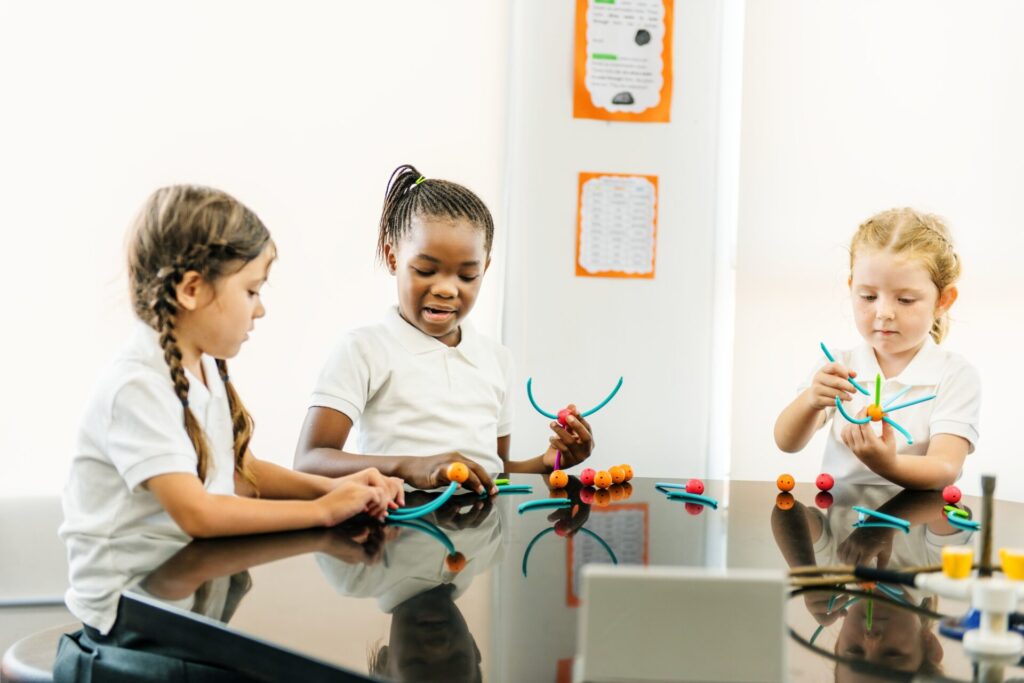


For most young learners, speaking is the hardest part. Reading and writing happen on paper, where there is time to think. But speaking requires a child to open their mouth, produce language in real time, and deal with whatever happens next — all while someone is listening. Cambridge Starters speaking at ILC Hua Hin is taught in a way that takes this reality seriously, building spoken confidence through private lessons that give children the space, time, and encouragement they need to find their voice in English. Within the Cambridge Primary Daytime Learning Programme, spoken English is woven into every lesson from day one.
What the Cambridge Starters Speaking Test Actually Involves
The speaking component of Cambridge Starters is deliberately gentle. Children interact with an examiner using picture prompts, pointing to things, naming them, and answering simple questions about familiar topics. There are no trick questions and no complex grammar demands. What the examiner is looking for is communication — can this child respond to simple English and make themselves understood?
At ILC, preparation for this assessment begins not in a dedicated exam-prep slot but in every single lesson of the course. Teachers focus on helping children speak clearly, respond confidently, and demonstrate understanding through natural interaction. There is no pressure to produce perfect grammar — fluency and confidence come first, and accuracy follows naturally.
Why Private Lessons Produce Faster Speaking Confidence
In a class of twenty children, a shy or hesitant learner can stay quiet for an entire lesson without anyone noticing. In a one-to-one or small-group session at ILC, that is simply not possible — and that is a genuinely good thing. The teacher brings the child gently but consistently into spoken interaction throughout the lesson, creating low-stakes opportunities to practise every few minutes. Over time, this accumulates into real fluency that would take far longer to build in any large-class setting.
Teachers at ILC know each child’s speaking profile closely — whether they struggle with pronunciation, hesitate over vocabulary, or speak accurately but too quietly. Every lesson is designed to address those specific patterns, which produces improvement that is both faster and more durable than generic speaking practice.
The Role of Native Teachers in Speaking Development
Native and bilingual teachers at ILC model fluent, natural English throughout every session. Children absorb patterns of speech — rhythm, intonation, pronunciation — from the people they hear speaking around them. When their teacher is a native speaker using English naturally and correctly throughout the lesson, that absorption happens continuously. Cambridge English research consistently shows that exposure to authentic spoken language is one of the most powerful drivers of speaking development in young learners.
British Council Primary Plus communication activities and National Geographic Trailblazer discussion tasks give children genuinely interesting things to talk about. A child who is curious about a topic takes more risks with language, speaks for longer, and remembers what they have practised far better. For children who want even more speaking practice outside lesson time, the ILC English Club offers a relaxed, social setting where language flows naturally.
Ready to Develop Your Child’s Speaking Confidence?
Progress in Cambridge Starters speaking is tracked and included in weekly reports throughout the programme. If you want your child to feel genuinely ready for the speaking component, ILC Hua Hin is the right place to prepare.
Visit ILC to learn more, or book a consultation today. Follow ILC on Facebook and view full course details at the Cambridge Primary Daytime Learning Programme page.