

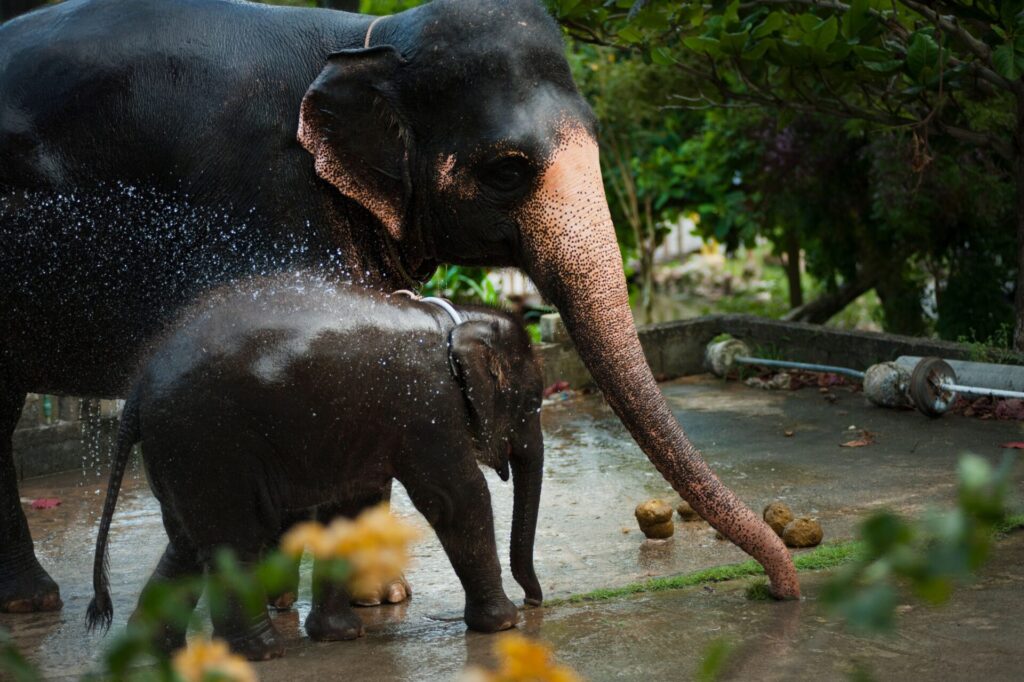

English Animal Vocabulary in Hua Hin
English animal vocabulary in Hua Hin comes up in real conversation more often than most adult learners anticipate when they first start the Pre-A1 Foundation programme at ILC. Hua Hin is a tourist city with beaches, markets, national parks, and a thriving hospitality industry. Foreign visitors regularly ask Thai adults about local wildlife — elephants, monkeys, dogs, snakes, sea turtles — and about the food on their plates — fish, chicken, crab. Adults who work in hotels, restaurants, tour operations, markets, or any outdoor industry in Hua Hin encounter English animal vocabulary almost every working day.
At ILC, English animal vocabulary in Hua Hin is introduced as a practical vocabulary set connected to the learner’s real professional context, not as a children’s exercise. The session covers the animals the learner is most likely to encounter in English conversation: cat, dog, bird, fish, horse, cow, and elephant. It also introduces the animals that appear in food vocabulary — chicken, fish, crab, shrimp — which the learner may have already seen in the food session, building a cross-topic vocabulary network that reinforces learning from multiple angles. The full programme structure is explained on the Pre-A1 Foundation English Coaching page at ILC.
Pronunciation Challenges in English Animal Vocabulary
English animal vocabulary in Hua Hin at Pre-A1 level presents specific pronunciation challenges for Thai speakers that a private coach is well-placed to address. The word “bird” requires the central vowel sound — the ER in the middle — which does not exist in Thai and is one of the most consistently mispronounced English sounds by Thai learners at this level. “Horse” has a final SE that Thai speakers frequently drop, producing “haw” instead. “Elephant” has three syllables with a stress pattern — EL-e-phant — that Thai speakers sometimes produce incorrectly, emphasising the second syllable instead of the first.
At ILC, English animal vocabulary in Hua Hin is always taught with pronunciation as a primary focus alongside meaning. The coach introduces each animal word, demonstrates the correct pronunciation, and has the learner repeat it until it is accurate enough to be understood by a native English speaker without difficulty. This is not perfectionism — it is the minimum standard required for real communication. The British Council’s guidance on pronunciation for adult learners confirms that addressing pronunciation errors at the point of first introduction is significantly more effective than correcting embedded errors later. English animal vocabulary in Hua Hin at ILC is therefore taught with the same pronunciation rigour as every other vocabulary set in the programme.
Connecting Animal Vocabulary to Previously Learned Language
English animal vocabulary in Hua Hin at ILC is not taught in isolation. The coach uses the animal vocabulary session to integrate new words into the sentence structures and vocabulary the learner has already learned. “There is a cat in the garden.” “I like dogs.” “The bird is on the table.” “I do not like snakes.” “Whose horse is that?” Each of these sentences uses animal vocabulary combined with previously learned language — there is, I like, prepositions of place, possessives, demonstratives — which reinforces the earlier learning while building new vocabulary simultaneously.
This integration approach is a deliberate feature of private coaching at ILC. Rather than treating each vocabulary set as a separate module to be completed and moved on from, the coach constantly connects new language to what the learner already knows. English animal vocabulary in Hua Hin at ILC is therefore not just a new list of words — it is an extension of the learner’s existing language network, which makes the new words more memorable and more immediately usable. The adult English courses at ILC are built on this network principle throughout every level of the programme.
Animal Vocabulary in Professional Situations in Hua Hin
The professional applications of English animal vocabulary in Hua Hin are specific and immediate. A tour guide needs to be able to say “the elephants come to this area in the morning” and “do not feed the monkeys.” A restaurant server needs to understand “is this fish fresh?” and “I do not eat meat.” A hotel receptionist dealing with a guest who has found a stray cat or dog needs to be able to communicate about the situation in English. A market vendor selling fresh fish, chicken, or prawns needs to understand and respond to basic questions about their products in English.
English animal vocabulary in Hua Hin at ILC is therefore tailored to the individual learner’s professional context as much as possible. The coach finds out what the learner does for work, which animals they are likely to encounter in that context, and prioritises those animals in the session practice. A learner who works in a seafood restaurant gets extensive practice with fish, prawn, crab, and squid. A learner who works at a wildlife sanctuary gets extensive practice with elephant, monkey, and bird. This personalisation of vocabulary practice is one of the clearest examples of why private coaching at Pre-A1 level produces faster and more durable results than a standardised group class. The Cambridge English CEFR framework identifies basic vocabulary for familiar topics as a Pre-A1 competency — and at ILC in Hua Hin, “familiar” always means familiar to the individual learner, not familiar to a hypothetical average student. Adults who want to find out how this personalised approach would work for their specific situation can book a free consultation at ILC.
Learn English animal vocabulary in Hua Hin with ILC. Book a programme today.