

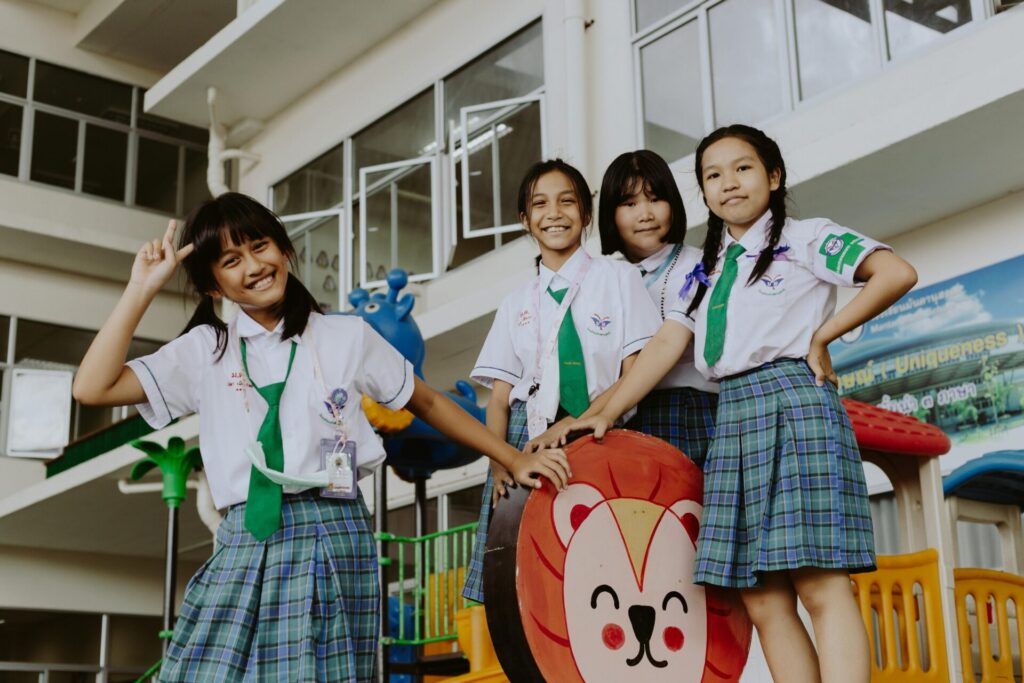
M1 English Camp Activity Programme
The activity programme in a residential English camp for M1 students is either the programme’s most powerful learning tool or its most significant wasted opportunity. When afternoon activities are unstructured recreation with some English expectations loosely attached, they produce very little. When they are deliberately designed as communicative extensions of the morning’s formal sessions — using real environments, real interactions, and genuine communicative stakes to reinforce and apply the Cambridge Flyers language the morning built — they produce the kind of motivated, spontaneous English speaking that no classroom activity can replicate. At ILC Hua Hin, the M1 English camp activity programme in Hua Hin is firmly the second kind.
How the Activity Programme Is Designed
The M1 English camp activity programme in Hua Hin is structured around Hua Hin’s cultural landmarks, each selected for its specific communicative potential within the Cambridge Flyers syllabus. The native English teacher accompanies every excursion and structures real-time speaking tasks within each visit — not as a formal lesson conducted outdoors, but as a genuine guided communicative experience in which students engage with what they are seeing, discussing it in the Flyers-level English the morning sessions have been developing.
The programme visits Hua Hin’s railway station, Khao Takiab, Plearn Wan vintage village, the Cicada Market, Wat Huay Mongkol, and Hua Hin Beach across the days of the residential camp. Each destination provides different vocabulary contexts, different grammatical opportunities, and different communicative demands — ensuring that the M1 English camp activity programme in Hua Hin develops the full range of Flyers-level speaking skills rather than a single register of English applied to a single type of environment.
The Railway Station: History, Description, and Narrative English
Hua Hin’s railway station is the starting point for many groups’ afternoon cultural programme. Built in 1926 in traditional Thai architectural style, it is genuinely beautiful and genuinely interesting to M1 students — which matters, because students produce better English when they care about what they are describing. At the station, the M1 English camp activity programme in Hua Hin focuses on extended description, historical narrative, and the kind of comparative English — comparing the old station to modern stations students know — that the Cambridge Flyers assessment specifically tests.
The native teacher facilitates the conversation at the station in the natural, exploratory way that makes the interaction communicative rather than educational — asking genuine questions, responding to what students say, extending the conversation in directions that require students to produce language they have not specifically prepared.
Khao Takiab and the Natural Environment
Khao Takiab — Monkey Mountain — is the coastal temple hill at the southern end of Hua Hin Beach, and it provides the context for the environmental vocabulary and descriptive English that feature prominently in the English Speaking Boardframeworks used in the morning sessions. Students describe the landscape, the monkeys, the temple, and the view in extended English sentences, using the comparative and superlative structures the Flyers level develops. The setting is genuinely engaging — there are real monkeys, a real sea view, and real steps to climb — and that engagement produces the communicative motivation that makes the M1 English camp activity programme in Hua Hin work as a language learning tool.
Plearn Wan, Markets, and the Cultural Conversation
Plearn Wan vintage village and the Cicada Market provide the context for the cultural comparison, transactional English, and opinion-giving that complete the communicative range of the Flyers level. At Plearn Wan, students discuss Thai history and culture — what life was like in the past, what has changed, what they prefer. At the market, they attempt real transactional English with real communicative consequences. At Hua Hin Beach, they produce the informal, narrative English that rounds off the afternoon and consolidates the day’s language development.
Together, these destinations make the M1 English camp activity programme in Hua Hin a genuine communicative education — one that uses the town as a learning resource and produces the motivated, real-world English speaking that the Flyers assessment ultimately rewards.
Safety and Supervision During the Activity Programme
ILC Hua Hin provides qualified staff supervision for all off-site cultural excursions in the M1 English camp activity programme in Hua Hin. Students are within a supervised group at all times, and all excursion routes and timings are planned and confirmed before the programme begins. School directors can request full details before any booking is confirmed.
Review the Cambridge Flyers assessment framework and Cambridge’s resources for parents for context to support parent communication. Use the ILC Hua Hin English level test to confirm your group’s level before booking.
Find out more about the Residential English Speaking Camp at ILC Hua Hin, or explore the Residential English Tours as an alternative. Speak to our team to discuss the M1 English camp activity programme in Hua Hin in detail and what it would deliver for your school group.