

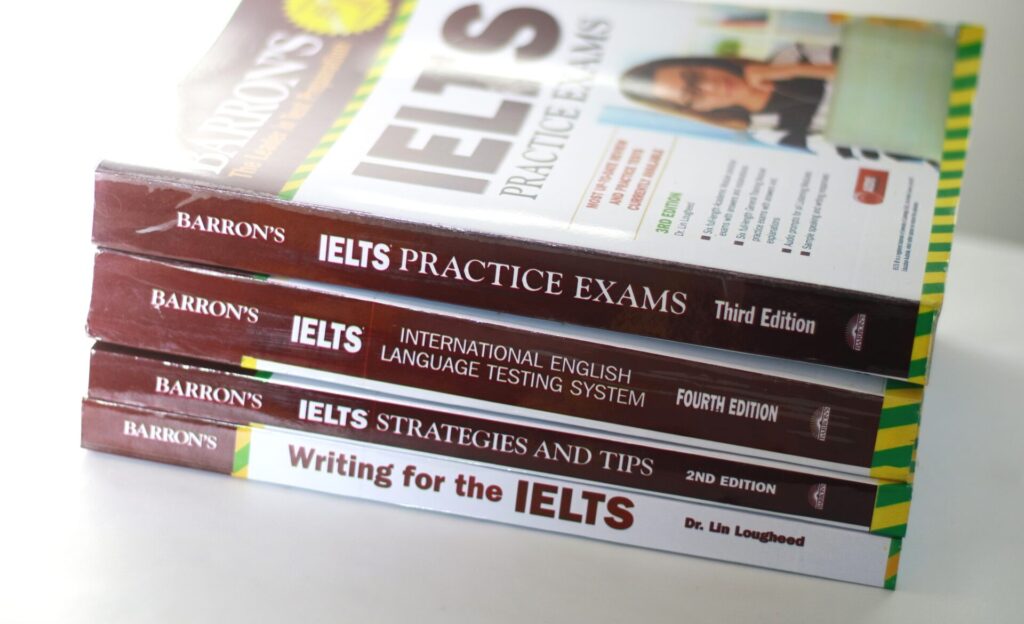

Patience, Practice, and Real Progress
The IELTS Preparation Process is often misunderstood as a short sprint toward a test date. In reality, it is a structured journey that rewards patience, consistent practice, and steady progress. Learners who treat IELTS as a process rather than a one-off exam tend to achieve stronger scores and develop English skills that last well beyond test day.
Language learning research consistently shows that progress happens gradually, not overnight. Expecting instant results often leads to frustration, while committing to a realistic process leads to genuine improvement. Cambridge research explains that learning a language develops in stages, with progress appearing uneven at times but remaining measurable over the long term.
How long does it take to learn a language?
This understanding sits at the heart of the IELTS Preparation Process.
Understanding the IELTS Preparation Process
The IELTS Preparation Process is a long-term approach to developing listening, reading, writing, and speaking skills together. These skills are interconnected, and progress in one area often supports progress in another. For example, improved listening can lead to better speaking fluency, while stronger reading skills often improve writing accuracy.
Progress does not happen evenly. Learners may see early gains in receptive skills such as listening and reading before improvements appear in productive skills like writing and speaking. This is normal and should be expected. Understanding this prevents unnecessary anxiety and keeps learners focused on development rather than short-term scores.
At ILC, students are guided to see IELTS as a skills-based process rather than a test of memory. This approach underpins
IELTS Preparation & Coaching Hua Hin,
where learners follow a clear pathway with realistic milestones.
Patience as the Foundation of the IELTS Preparation Process

Patience is the first requirement of the IELTS Preparation Process. Without patience, learners become discouraged when scores do not rise immediately. This often leads to rushed study habits, over-reliance on tips, and inconsistent practice.
Language accuracy, vocabulary range, and fluency require time to develop. Learners who rush often skip essential stages, leaving gaps that later limit progress. A patient approach allows learners to consolidate grammar, expand vocabulary naturally, and gain confidence through repeated use.
The British Council highlights that effective language learning requires time, repetition, and reflection rather than shortcuts.
Learning a language takes time
Accepting this reality is a turning point for many IELTS candidates.
Practice That Drives Real Improvement
Practice is the engine of the IELTS Preparation Process, but not all practice leads to improvement. Repeating tasks without understanding mistakes results in stagnation rather than progress.
Effective practice is targeted. Each activity has a clear purpose. A listening task may focus on identifying key information. A writing task may focus on paragraph structure. A speaking task may focus on extending answers logically.
Official IELTS guidance reinforces the importance of balanced, regular practice across all four skills rather than last-minute cramming.
Prepare for your IELTS test
Structured programmes such as the
Power IELTS Course
are designed around this principle, ensuring that practice is purposeful and linked to measurable outcomes.
Feedback and Adjustment in the IELTS Preparation Process

Feedback transforms practice into progress. Without feedback, learners repeat the same errors and develop false confidence. With feedback, they learn how to improve efficiently.
In the IELTS Preparation Process, feedback must be specific and actionable. Learners need to understand exactly what is wrong and how to fix it. This is especially important for writing and speaking, where small adjustments can significantly affect band scores.
Cambridge English research highlights that guided learning hours and targeted feedback are key indicators of language progress.
Guided learning hours
Learners who need focused support often benefit from
IELTS One-to-One Coaching,
where weaknesses are addressed directly and progress becomes clearer and faster.
Routine, Discipline, and Confidence
Routine plays a central role in the IELTS Preparation Process. Learners who study regularly, follow a plan, and track progress are more successful than those who study inconsistently.
Discipline does not mean studying for long hours. It means showing up consistently and working with focus. Even short daily sessions build momentum and confidence over time. This routine reduces stress because learners know what to study and why.
Confidence grows as a by-product of this process. Learners who practise consistently and receive feedback begin to trust their ability. This confidence reduces test anxiety and improves performance under pressure.
Long-Term Value of the IELTS Preparation Process
The IELTS Preparation Process offers value far beyond the exam. Learners develop discipline, time management, and communication skills that support academic and professional success.
These skills are transferable. University study, workplace communication, and professional development all rely on the same abilities developed during IELTS preparation. Learning experts outside language education echo this principle, noting that progress in complex skills comes from sustained effort rather than isolated events.
Learning is a process, not an event
When learners see IELTS as part of their personal development rather than just a test, motivation increases and outcomes improve.
Trusting the IELTS Preparation Process
Trust is essential. Learners who trust the IELTS Preparation Process remain patient, consistent, and focused. They understand that progress may not always be immediately visible, but it is happening beneath the surface.
This trust reduces anxiety and improves engagement. Learners approach practice with curiosity rather than fear and treat feedback as guidance rather than criticism.
Conclusion: Progress Comes from the IELTS Preparation Process
The IELTS Preparation Process is built on patience, practice, and steady progress. There are no shortcuts, but there is a clear path. Learners who commit to the process develop real language ability, confidence, and control.
By focusing on long-term improvement rather than quick results, learners achieve scores that reflect their true ability and gain skills that support success beyond the test. For learners and parents in Thailand seeking a structured approach, further information is available on the
Thai Version.
The IELTS Preparation Process is not about passing an exam. It is about building the English skills and mindset needed for the next stage of life.