

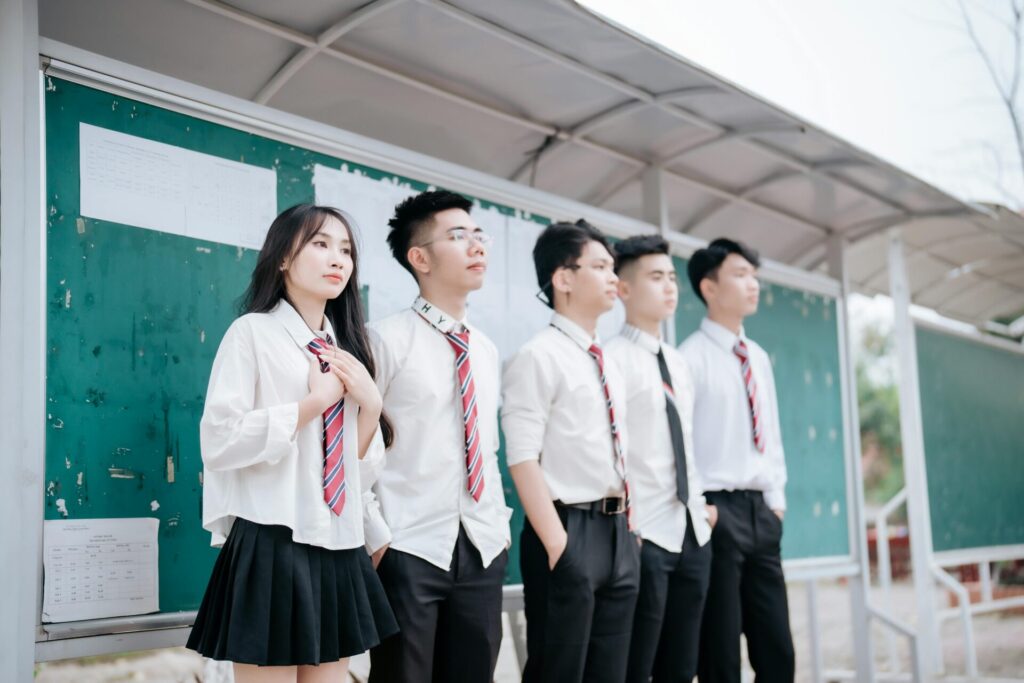
A Trinity GESE School Trip Programme
Ten minutes sounds short. In a one-to-one examination that assesses your ability to speak naturally in English with a trained assessor who will ask questions you have not prepared for, ten minutes is long enough to distinguish clearly between a student who has genuinely developed speaking confidence and one who has memorised a script. The Trinity GESE school trip programme in Hua Hin at ILC is designed around what happens in those ten minutes — building the specific communicative behaviours the examination assesses, through morning sessions and afternoon cultural visits that together produce the speaking confidence no classroom drill can replicate.
The first phase of the examination is the prepared topic. The student presents something they know well and care about — two to three minutes of extended speaking about a personally chosen subject, followed by follow-up questions from the examiner that the student has not seen in advance. The second phase is the conversation, in which the examiner introduces two subject areas from the standard Trinity list and holds a real discussion with the student about both. The examination rewards students who speak with genuine communicative intent, give reasons for their opinions, and sustain the conversation through the follow-up questions rather than retreating to minimal answers.
How the Morning Programme Prepares for Phase One
The prepared topic on the Trinity GESE school trip programme in Hua Hin is not left to chance. From the first morning session, the native teacher works with each student on the specific topic they are building — helping them structure an extended presentation, develop the vocabulary for their chosen subject, and practise the linked turn and reason-giving patterns that the Grade 4 specification assesses.
From Grade 4 onwards, candidates must prepare a personal topic for discussion during the exam, and the ideal is to find a topic of personal interest and plan to include the communicative skills and grammar functions required at that grade. Students on the Trinity GESE school trip programme in Hua Hin build their topic from the afternoon visits — from what they saw at Khao Takiab, what they experienced at the elephant sanctuary, what struck them about Maruekhathayawan Palace — which means the personal interest is genuine and the communicative skills emerge naturally from a real experience rather than being imposed on an invented one. Cambridge English
How the Afternoon Programme Prepares for Phase Two
The conversation phase of the Trinity GESE examination draws from a list of subject areas that includes the environment, daily life, travel, education, health, and the world around the student. Every afternoon visit on the Trinity GESE school trip programme in Hua Hin covers at least one of these areas in a genuine communicative context — the elephant foundation for the environment, the fishing village for daily life and work, the palace for culture and travel, the railway station for history and architecture.
The native teacher structures every afternoon visit around the conversational English these subject areas require — asking opinion questions, requesting reasons, introducing a counter-argument, and holding the kind of genuine exchange that the Trinity examiner replicates in the assessment. By the time students have completed three to five afternoons in Hua Hin and Prachuap Khiri Khan province, they have already had the Trinity conversation phase — multiple times, in multiple subject areas, with a native speaker who responded to what they actually said.
Budget, Duration, and What Each Length of Stay Delivers
A three-day Trinity GESE school trip programme in Hua Hin covers the core prepared topic work and two conversation phase subject areas. A five-day stay adds two more subject areas and a longer morning programme arc. A full week delivers all subject areas, a full prepared topic development process, and a mock examination on the penultimate morning. Schools choose the duration that suits their budget, and ILC Hua Hin structures the programme to maximise outcomes at every length.
Find out more about Hua Hin and its surroundings and review the full Trinity GESE examination framework before making your decision.
Find out about the Residential IELTS Course at ILC as the natural next step after Trinity GESE for M5 and M6 students. View the Residential English Speaking Camp as an alternative for groups whose primary objective is general speaking development. Speak to our team to plan the right Trinity GESE school trip programme in Hua Hin for your M4 group.