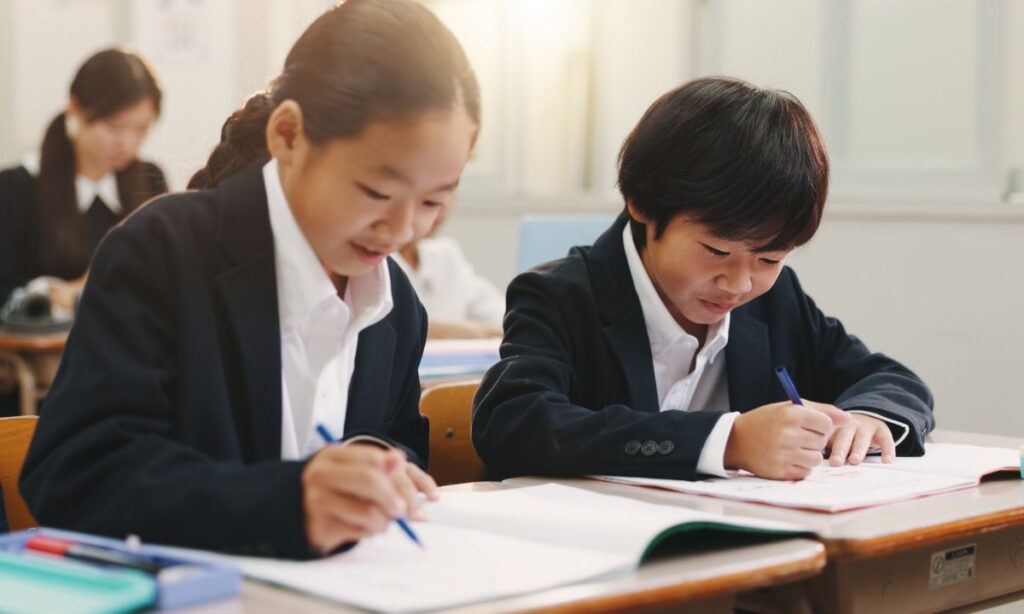


A2 Key Preparation Camp for Thai Secondary Schools
The gap between classroom examination preparation and genuine examination readiness is wider than most M2 students — or their schools — realise. In a standard secondary English class, A2 Key for Schools preparation tends to concentrate on the components that are easiest to practise in groups of thirty: reading tasks from past papers, listening exercises from a CD, vocabulary drills from a textbook. These are useful, and they are necessary. But the speaking component — the part of the A2 Key for Schools examination that requires students to produce extended, spontaneous English in front of an examiner — is the component that classroom preparation consistently fails to develop adequately. A residential A2 Key preparation camp in Thailand changes this. Not by drilling examination scripts, but by placing M2 students in a three-hour daily speaking environment with a native English teacher and a maximum of twelve students, where the communicative confidence the examination rewards is developed through genuine practice rather than simulated performance.
At ILC Hua Hin, the residential A2 Key preparation camp in Thailand is built on the understanding that examination readiness is a whole-student condition — not just a question of knowing the right answers, but of arriving at the speaking test having already spent several days producing extended, independent English in response to real situations, real people, and real communicative demands.
What the A2 Key for Schools Examination Actually Requires
The A2 Key for Schools examination tests all four skills, but it is the speaking component that most M2 students have practised least and need most. The speaking test has two parts. In Part 1, students respond to personal and factual questions from the examiner — questions about their school, their home, their family, and their daily life — in extended responses that go beyond single-word answers. In Part 2, students discuss likes and dislikes with another candidate, giving and asking for reasons, agreeing and disagreeing, and sustaining a conversation for five to six minutes on a topic involving everyday activities and hobbies.
Neither of these tasks rewards a student who has only practised reading past papers. They reward a student who has spent three hours every day for several days speaking English with a native teacher in a class of twelve — who has been asked personal questions and learned to answer them in extended, naturally connected sentences, and who has discussed opinions and preferences with peers in a supported but genuinely communicative environment. The residential A2 Key preparation camp in Thailand at ILC Hua Hin develops exactly these students.
How the Three Morning Hours Build Examination-Ready Speaking
The morning sessions of the residential A2 Key preparation camp in Thailand are structured around the A2 Key for Schools preparation framework from Cambridge — vocabulary sets, grammar targets, and speaking tasks that mirror the examination’s requirements while feeling genuinely communicative rather than test-focused. In a class of no more than twelve, the native teacher can use the Just a Minute warmer from Cambridge’s activity booklet — asking each student to speak for sixty seconds on a topic they have just prepared — in a way that is both engaging and directly preparation-relevant. Students develop the ability to sustain spoken English beyond their first sentence, which is the specific skill the A2 Key speaking assessment most directly rewards.
The grammar targets of the preparation camp — past simple for narrating, comparatives for describing and evaluating, modal verbs for discussing possibility and preference — are developed through speaking tasks that require their active production, not through exercises that test whether students recognise them in a text.
The Afternoon: Rajabhakti Park
Rajabhakti Park — the vast memorial park outside Hua Hin featuring enormous bronze statues of seven revered ancient Thai kings — is the afternoon destination for this day of the residential A2 Key preparation camp in Thailand. The park is genuinely striking in scale and historically rich in content, and it generates the kind of extended descriptive and reflective English that the A2 Key speaking tasks require — the ability to describe what you see, discuss who these people were, and express opinions about history and heritage in extended, independently produced English.
The native teacher accompanies the group throughout the visit, asking each student the kind of personal and factual questions that Part 1 of the A2 Key speaking test uses — what do you think of this place, have you visited anywhere like this before, what does this park tell you about Thai culture — and facilitating the kind of extended response practice that three hours of morning instruction has been building towards. Students who have never discussed Thai history in English find that the scale and presence of the site pulls language out of them that they did not know they had prepared.
The connection between the morning’s examination preparation and the afternoon’s real communicative experience is the most important structural feature of the residential A2 Key preparation camp in Thailand at ILC Hua Hin. Students are not practising examination responses in a hotel room — they are developing the speaking confidence and communicative fluency that the examination is designed to measure, through experiences that make that development feel genuine rather than rehearsed.
What Schools Can Tell Parents About the Preparation Camp Outcomes
Schools that bring M2 groups to the residential A2 Key preparation camp in Thailand at ILC Hua Hin can be specific with parents about what the programme delivers. Students return having practised the A2 Key speaking tasks in a genuinely communicative environment for three hours every day. They have spoken English about real places, real experiences, and real opinions with a native teacher whose responses were authentic rather than pedagogical. They have developed the extended response habits that the examination rewards and that classroom preparation rarely has enough time to build.
ILC Hua Hin provides 24/7 supervision for all residential and off-site elements of the programme, including the Rajabhakti Park visit. Full safeguarding details are available before any booking is confirmed. The British Council’s young learner framework and Cambridge’s parent resources provide useful external context for parent communication.
Use the ILC Hua Hin English level test to confirm your M2 group is at the right level before booking.
Find out more about the Residential English Speaking Camp at ILC Hua Hin, or explore the Residential English Tours as a broader option. Speak to our team to discuss how the residential A2 Key preparation camp in Thailand could fit your school’s examination schedule and what it would deliver for your M2 students.