
 How Finding Nemo and Listening Skills in English Build Confidence
 How Finding Nemo and Listening Skills in English Build Confidence
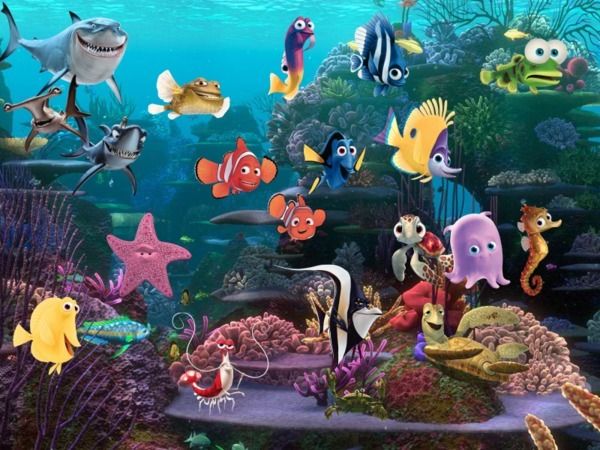
Dory cannot remember anything for more than a few seconds. Marlin cannot stop worrying. Nemo cannot quite believe that the ocean is as dangerous as his father says. Finding Nemo and listening skills in English are connected through all three of these characters in different ways — because the film is, at its heart, a story about what happens when you pay attention to the wrong things and miss what actually matters.
For a young English learner, that theme lands with surprising precision. A child who is too focused on whether they are making a mistake to actually listen to the person speaking to them is doing exactly what Marlin does — letting anxiety get in the way of connection. Finding Nemo and listening skills in English give a teacher a story that mirrors the challenge the children themselves are facing, and that mirror is one of the most powerful tools in a language classroom.
What Dory Teaches Us About Listening
Dory is one of the great comic creations in Disney’s history, but she is also a genuinely profound character when it comes to language learning. Her short-term memory loss means that every conversation is, in a sense, a fresh start. She cannot hold onto what was said. She responds to what is in front of her, not to a plan or a script. And somehow, despite all of that, she communicates brilliantly.
In a session built around Finding Nemo and listening skills in English, Dory becomes a way into a conversation about what it actually means to listen. Not to wait for your turn to speak, not to plan your next sentence while the other person is still talking, but to genuinely receive what is being said and respond to it. That is a skill that most adults find difficult. In children, it needs to be explicitly taught and practised.
The English Speaking Board identifies active listening as one of the foundational components of spoken language development — equally important as the ability to produce language clearly. Finding Nemo gives teachers a character who makes the absence of listening both funny and poignant, which is the most effective way to make any concept memorable for a six-year-old.
Questions as the Heart of Communication
Finding Nemo and listening skills in English also open up a rich conversation about questions — why we ask them, what makes a good question, and what happens when we ask the right question at the right moment. The entire narrative of the film is driven by a question: where is Nemo? Every character in the film is, in some sense, trying to find an answer.
In a Disney English Club session, children can be invited to generate their own questions about the story. What do you want to know about Nemo? What would you ask Marlin if you could talk to him? What question would you ask the shark? This is not a vocabulary exercise. It is a genuine communicative challenge — the ability to formulate a question that you actually want answered, in a language you are still learning.
Voice 21’s guidance on questioning in oracy development identifies the ability to ask genuine questions as a higher-order communication skill that develops through practice in supportive, small-group environments. Finding Nemo gives children both the motivation to ask and the story context to make the questions feel real.
Partner Work and the Listening Loop
One of the most effective activities in a session built around Finding Nemo and listening skills in English is structured partner work where one child tells a part of the story and the other child has to respond to what was actually said — not to what they expected to hear.
This is harder than it sounds. Children naturally want to tell their own version of the story rather than respond to their partner’s. The activity teaches them to hold off, to genuinely receive the other person’s words, and to build a response from what was given to them. That loop — speak, listen, respond — is the fundamental unit of all communication, and practising it within the familiar world of Finding Nemo makes the challenge manageable and the success visible.
You can find out more about how communication skills are developed throughout the programme on the Disney English Club page and the English Explorers page.
What Parents Often Tell Us
Parents whose children have been through a Finding Nemo session frequently tell us that their child came home asking more questions than usual. Not just about the film — about things in general. What is that? Why does it work like that? What do you think about this?
That is not a coincidence. Finding Nemo and listening skills in English work together to shift something in how a child engages with the world around them. A child who has spent 75 minutes being rewarded for asking good questions starts to understand that questions are a form of power — that asking is not a sign of not knowing but a sign of wanting to know.
Cambridge Assessment English research on young learner communication identifies curiosity-driven language use as one of the strongest predictors of long-term English development. To find out more and secure a place for your child, visit the ILC Hua Hin page or complete the pre-application form.
The British Council’s young learner framework also identifies listening and questioning as skills that must be explicitly taught — not assumed to develop on their own. Finding Nemo makes that teaching feel like anything but a lesson.