

How Thiago Silva Learned English
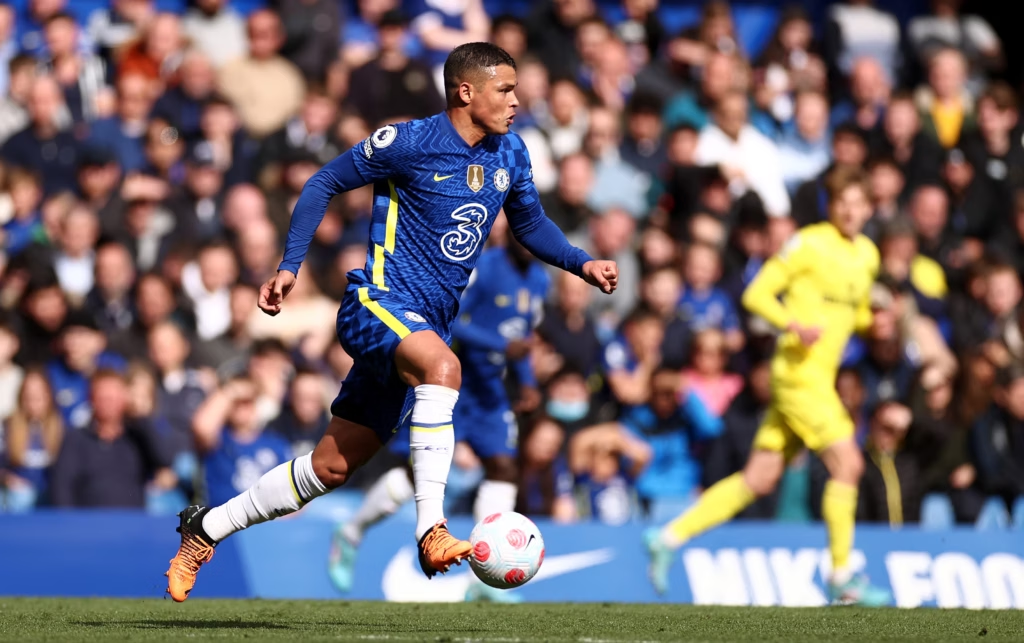
The story of how Thiago Silva learned English begins in 2020 at Stamford Bridge, when one of the greatest defenders of his generation arrived in London aged 36 speaking Portuguese, French and Italian fluently and English not at all. The circumstances would have justified a more passive approach: at 36, with a career full of honour and achievement already behind him, the case for investing serious effort in a new language would not have been obvious to most people. How Thiago Silva learned English anyway, and the depth of that investment, reveals something important about the professional standards that had produced his career in the first place.
Those standards were non-negotiable. They applied to language as they applied to everything else.
Daily Lessons And A Completely New Vocabulary
How Thiago Silva learned English involved daily one-on-one tutoring sessions from the earliest weeks of his Chelsea career, building the grammatical framework and football-specific vocabulary that his professional function required while the daily immersion of training and dressing room life provided the communicative practice that formal lessons alone cannot produce. Krashen’s research on comprehensible input identifies the combination of structured instruction and genuine communicative use as the most effective model for adult second-language acquisition, and how Thiago Silva learned English followed this model consistently from day one.
The specific challenges he faced were different from those of younger players in this series. A 36-year-old brain is less phonologically flexible than a 19-year-old one, making native-like pronunciation harder to achieve. But vocabulary acquisition, grammatical comprehension and communicative competence respond to investment at any age, and how Thiago Silva learned English demonstrated this convincingly across his four Chelsea seasons. Full details of how the same principles apply in the classroom are on the Premier Skills Sundays page at ILC Hua Hin.
The Coaching Badge Chapter
The most concrete evidence of how Thiago Silva learned English seriously comes from his decision to pursue his coaching badges through the English system while still playing professional football. The Scottish FA confirmed his UEFA B-Licence completion through the English programme, with progression to A-Licence work in Edinburgh following. Coaching education in English requires understanding complex tactical and pedagogical concepts presented in English, engaging with peers in formal seminar discussions and passing assessments in a register that daily football communication does not prepare anyone for.
How Thiago Silva learned English to this standard while playing in the Premier League is one of the most impressive language acquisition achievements in this entire series. It demonstrates that the investment was not about adequacy or survival. It was about mastery.
What Fans Noticed At The Club World Cup
Tribuna.com documented the fan reaction when Thiago Silva gave post-match interviews during Fluminense’s 2025 Club World Cup campaign, with multiple Chelsea supporters commenting that his English was “near perfect now” and speculating about a future coaching role back in England. How Thiago Silva learned English had continued developing well beyond his Chelsea years, and the fluency supporters were recognising in 2025 was the product of a language investment that had begun at 36 and had never stopped.
The lesson for parents in Hua Hin is straightforward. How Thiago Silva learned English shows that motivated adults can achieve substantial language development at any age. Cambridge’s research on CLIL and young learners confirms that starting earlier produces faster, more natural and more durable results. A child who begins at seven will achieve at 36 what Thiago Silva had to work extraordinarily hard to build from scratch.
Take the free English level test and book a consultation. For school groups, the Premier Skills Camp and ILC residential English tours are available. Contact ILC directly.