
Secondary School English Camp
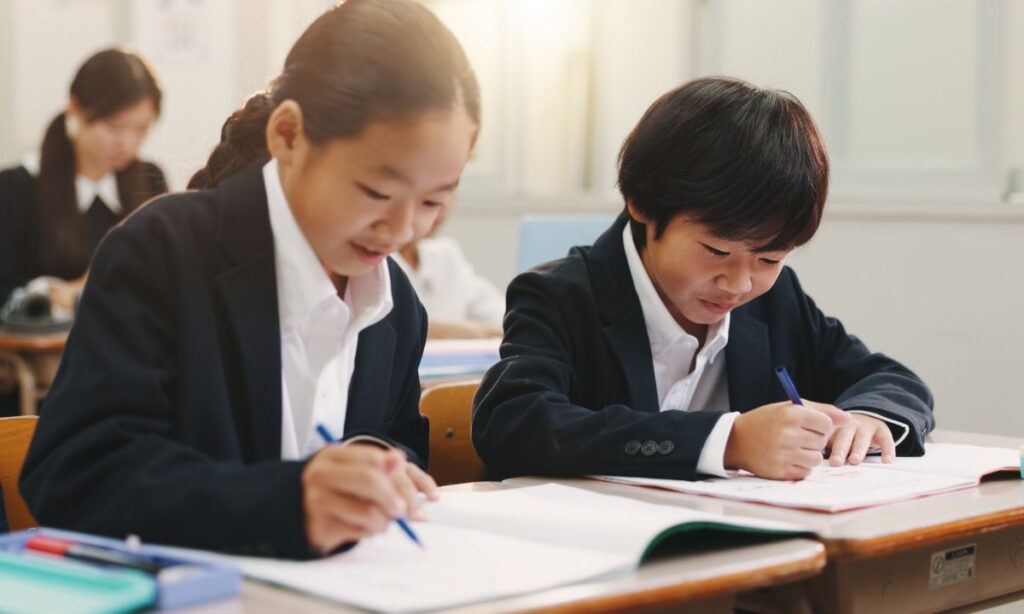
Secondary school students learning English in Thailand face a specific and well-documented challenge. They know enough to be self-conscious about making mistakes, but not enough to communicate with real confidence. The gap between understanding English and being willing to produce it is wider at secondary level than at primary, because the social stakes of getting something wrong in front of peers have increased significantly. A secondary English camp in Hua Hin that understands this challenge — and that is designed to address it rather than simply work around it — can produce a shift in M1 students’ relationship with spoken English that secondary school English lessons will take years to achieve on their own.
At ILC Hua Hin, the secondary English camp in Hua Hin uses the Cambridge Flyers syllabus, delivered by a native English teacher in a residential setting that combines structured morning speaking sessions with an afternoon cultural programme visiting Hua Hin’s most interesting landmarks. The combination of academic rigour and genuine cultural experience is what makes it work for secondary students specifically.
The Self-Consciousness Problem at Secondary Level
Primary students speak English without worrying too much about whether it sounds right. Secondary students are more aware of their audience, more sensitive to peer judgement, and more likely to choose silence over the risk of a mistake. This is not a character flaw — it is a developmentally normal response to a higher-stakes social environment. But it is catastrophic for speaking development, because speaking is a skill that only develops through practice, and students who avoid speaking in class are not practising.
A secondary English camp in Hua Hin addresses this by changing the social context. In a residential programme, away from school, with a native teacher who responds to every attempt with genuine engagement rather than correction, the social risk of speaking English is substantially reduced. Students take communicative chances they would never take in a classroom, and in taking them, they discover that the attempt produces real communication rather than embarrassment. That discovery changes how they approach speaking English when they return to school.
Cambridge Flyers as the Right Framework for M1
The Cambridge Flyers level is the ideal academic framework for a secondary English camp in Hua Hin for M1 students. Its topics — environment, technology, adventure, global issues, and the world beyond immediate experience — are genuinely engaging for thirteen-year-olds. Its grammar targets — past continuous, present perfect, modals, passive constructions — are the structures that secondary school English immediately calls on. And its speaking requirements — extended description, narration, opinion-giving, and discussion — are precisely the skills that M1 teachers expect and that most students arrive at secondary school without having adequately developed.
The English Speaking Board materials used alongside the Flyers framework in ILC Hua Hin’s programme develop the specific speaking behaviours the Flyers assessment rewards — extended response, clear expression, and the confidence to speak beyond single-word answers.
The Afternoon Cultural Programme as a Speaking Environment
Every afternoon of the secondary English camp in Hua Hin, students leave the residential setting and engage with the town. Hua Hin’s railway station, Khao Takiab, Plearn Wan vintage village, the Cicada Market, Wat Huay Mongkol, and Hua Hin Beach are all within reach of the residential programme and all provide genuine communicative contexts for Flyers-level speaking.
These are not sightseeing trips with a language activity attached. The native teacher structures each visit around specific Flyers topics and speaking tasks — description, narration, comparison, opinion — and the afternoon becomes an extension of the morning’s formal programme in a real-world context. For secondary students who have never had the experience of using English to engage with something genuinely interesting rather than to answer a textbook question, these afternoon sessions are often where the most significant shift in attitude occurs.
What Schools Report After the Programme
Schools that have brought M1 groups to a secondary English camp in Hua Hin at ILC consistently report the same observations. Students return more willing to volunteer answers in English class. They use longer sentences. They make mistakes more comfortably, because they have spent several days in an environment where mistakes led to communication rather than correction. And they have a specific reference experience — something they said at the railway station, something they described at Khao Takiab — that reshapes their sense of their own ability as English speakers.
ILC Hua Hin provides 24/7 supervision across all residential and off-site elements of the secondary English camp in Hua Hin — qualified staff, secure accommodation, and structured daily management from arrival to departure. Full safeguarding details are available before any booking is confirmed.
The British Council’s young learner guidance and Cambridge’s resources for parents provide credible external context for communicating the programme’s value to school management and parents.
Use the ILC Hua Hin English level test before booking to confirm your M1 group is appropriately placed.
Find out more about the Residential English Speaking Camp, or explore the Residential English Tours as an alternative. Speak to our team to discuss what a secondary English camp in Hua Hin would deliver for your M1 students.