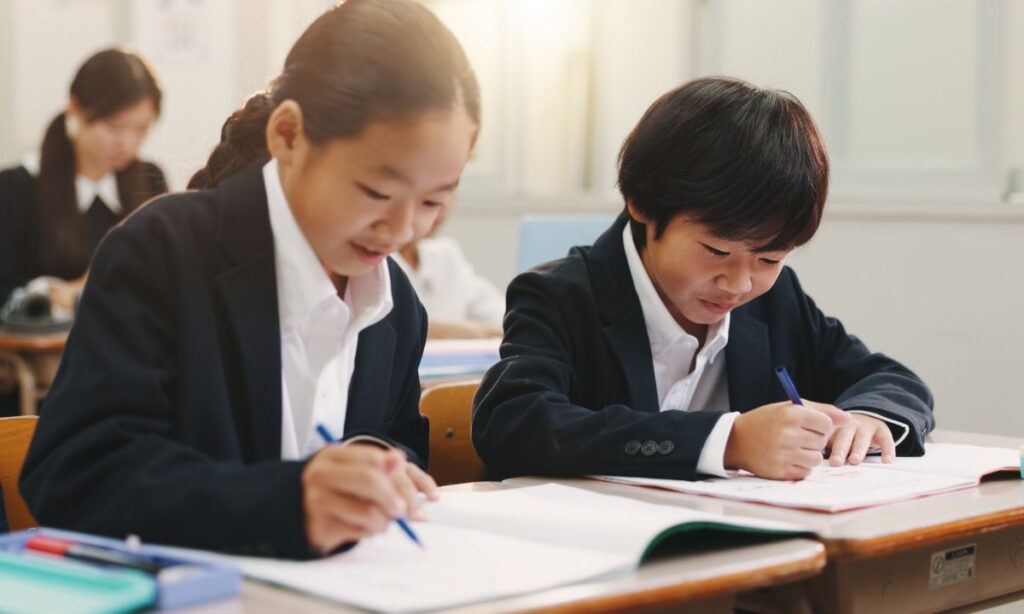


Class size in English language education is not a minor operational detail. It is one of the most significant determinants of how much productive speaking practice each student actually receives, how precisely the teacher can respond to individual errors, and how genuinely interactive the learning environment can be. A small class English camp in Thailand that caps every session at twelve students per native English teacher is not simply providing a more comfortable experience — it is providing a structurally different educational environment, one in which the outcomes for individual students are measurably better than in larger group formats.
At ILC Hua Hin, the maximum of twelve students per native teacher session on the A2 Key for Schools programme is the non-negotiable operational standard around which the rest of the programme is built. It is what makes three hours of morning instruction genuinely productive rather than nominally immersive. And it is what makes the small class English camp in Thailand at ILC Hua Hin comparable to a genuinely high-quality private language school experience rather than a large-group residential programme that calls itself small without organising itself accordingly.
What Twelve Students Means in Practice for Speaking Development
In a session of twelve M2 students and one native English teacher, every student speaks multiple times in every hour. Not when called upon by chance or when they volunteer out of confidence — but as a natural consequence of the class size and the interactive format of the sessions. A speaking task that produces thirty seconds of student talk in a class of thirty produces four or five minutes of student talk per individual in a class of twelve, and it is that volume of production — that sheer quantity of English spoken by each student in each session — that drives the speaking development the A2 Key for Schools qualification requires.
The native teacher in a small class English camp in Thailand of twelve also hears every error. Not a sample of errors from a rotating selection of students, but every error from every student in every session. This means that the corrective feedback the teacher provides is comprehensive rather than selective — no student’s systematic error is invisible to the teacher because the class is too large for them to attend to it. Tonal patterns in vowels, grammatical errors on modal verbs, the tendency to default to minimal responses when extended speech is possible — all of these are visible in a class of twelve in a way they are not in a class of thirty.
The A2 Key for Schools Framework in a Small Group Context
The A2 Key for Schools speaking tasks are fundamentally interactive — they require students to communicate with another person, to respond to what that person says, and to produce extended English in a genuinely conversational context rather than in a prepared monologue. A small class English camp in Thailand is the ideal format for developing these skills, because the class size allows the kind of genuine, responsive interaction that the examination tasks mirror.
The A2 Key for Schools preparation framework covers vocabulary, grammar, and communicative functions across topics that M2 students find relevant — travel, food, sport, school, the environment, and everyday social life. In a class of twelve, these topics generate genuine discussion rather than managed turns — twelve students with twelve perspectives, facilitated by a native teacher who knows each of them well enough to draw out the specific communicative range each one needs to develop.
The Afternoon: Pranburi Forest Park
The afternoon visit to Pranburi Forest Park — the mangrove forest park about twenty minutes south of Hua Hin on the Pranburi River estuary — takes M2 students to one of the most ecologically interesting and most visually distinctive environments in the region. Boardwalks through the mangrove canopy, the sound of the estuary, and the rich birdlife of the coastal wetland provide a context for the environmental vocabulary and descriptive English that the A2 Key for Schools framework includes in its vocabulary syllabus.
The small class English camp in Thailand’s afternoon visit to Pranburi is particularly effective because the forest environment generates the kind of quiet, observational English — describing what is around you, discussing what it is and why it matters, expressing opinions about nature and conservation — that requires the speaking behaviours the morning sessions have been building. The native teacher facilitates the conversation throughout the walk, engaging each student in the kind of extended English exchange that the intimacy of a small group makes possible even in an outdoor environment.
ILC Hua Hin provides 24/7 supervision for all residential and off-site elements of the small class English camp in Thailand, including the Pranburi visit. Full safeguarding details are available for school directors before any booking. The British Council’s guidance for young learners and Cambridge’s parent resources provide useful external context.
Use the ILC Hua Hin English level test to confirm your M2 group’s level before booking.
Find out more about the Residential English Speaking Camp at ILC Hua Hin and how the small group format works across the full programme. Speak to our team to discuss what a small class English camp in Thailand at ILC Hua Hin would look like for your M2 group.