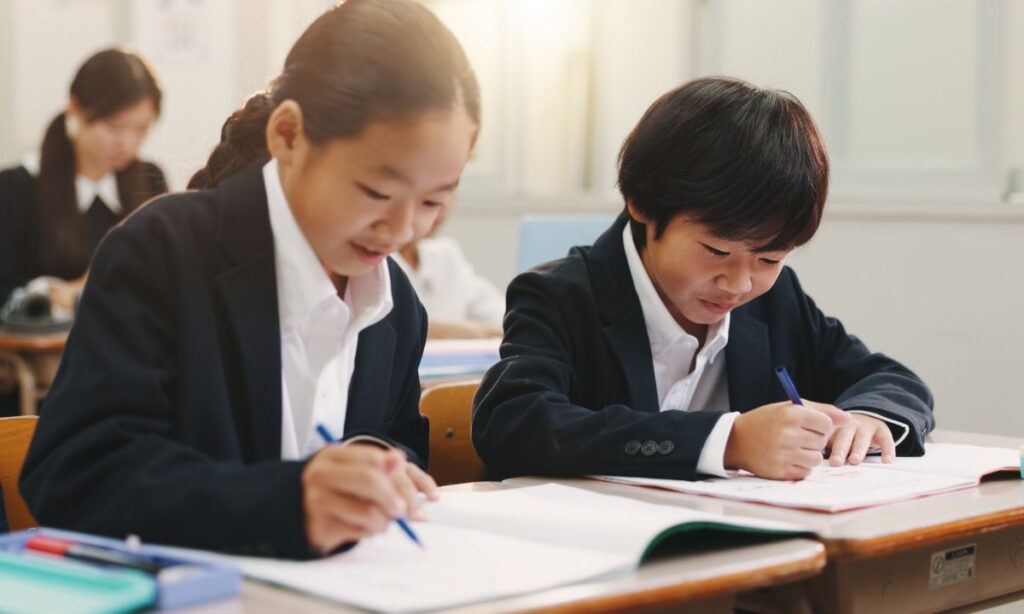


A2 Key English Programme
The value of a residential A2 Key programme in Thailand is not only what it produces during the programme — it is what students carry back to school with them when it ends. For M3 students, the return to the secondary English classroom after a week at ILC Hua Hin is a measurably different experience from the return after a term of standard classroom instruction, and the difference is visible in specific, observable ways that teachers and school directors can identify and report on.
Students who have completed the residential A2 Key programme in Thailand at ILC Hua Hin return with four things that the school classroom rarely produces in equivalent time: examination-specific skill in all four A2 Key components, communicative habits built through genuine native speaker interaction, vocabulary anchored to real experiences in a real place, and the self-knowledge that comes from having been formally assessed against the ILC English level test before and after the programme.
The Four Returnable Outcomes of the Programme
The first returnable outcome is reading strategy. Students who have practised skim reading, scanning, and intensive reading through the Cambridge lesson plan approach — in the specific context of each of the five reading parts — arrive back in their secondary English class with a framework for approaching any reading task that is both examination-relevant and genuinely transferable to academic reading across all subjects. The strategy of skim reading for thirty seconds before attempting any question, and of identifying text type before reading for meaning, is as useful in a Thai university entrance examination as it is in the A2 Key for Schools paper.
The second returnable outcome is writing accuracy. Students who have written picture stories using past simple tense, linking words, and conjunctions — and received specific native teacher feedback on each one — return with a more accurate and more confident written English production than they had before the residential A2 Key programme in Thailand began.
The third returnable outcome is listening discrimination. Students who have practised gist listening, detail listening, contrastive stress recognition, and the specific distractor-awareness skills that the Cambridge lesson plans develop return with listening habits that are more precise, more patient, and more examination-ready than they were before.
The fourth returnable outcome is speaking confidence — the willingness to attempt English in unprepared situations, the habit of extended responses rather than minimal answers, and the specific experience of having sustained English conversation with a native speaker for three hours every day across a residential week.
The Alphabet Stories Activity and How It Anchors Vocabulary to the Hua Hin Experience
The Alphabet Stories activity from Cambridge’s upper secondary warmer set — in which students create a collaborative story using words that begin with successive letters of the alphabet — is used in the final morning session of the residential A2 Key programme in Thailand as a vocabulary consolidation activity. Students are asked to use words that have appeared across the week’s sessions and afternoon visits — vocabulary from the hotel topic, the climate session, the personal writing tasks, the comparative grammar work — to build a story that references the Hua Hin experience they have shared.
The result is a piece of collaborative oral narrative that both consolidates the vocabulary of the week and creates a shared, memorable reference point that students carry back to school with them. Words that appeared in a reading passage are now in a funny story about the fishing village. Grammar that was practised in an open cloze task is now in a sentence about the elephant sanctuary. The residential A2 Key programme in Thailand ends with its vocabulary embedded in a shared experience, which is the most effective form of long-term retention available in a language programme.
The Afternoon: Hua Hin Local Food Market
The final afternoon of the residential A2 Key programme in Thailand returns students to the most everyday and most personally relevant communicative context of the week — the local food market, where the A2 Key vocabulary for food, shopping, and daily life finds its most natural and most functional application. Students navigate the market in English, summarise what they have bought and seen for the native teacher, and participate in the last genuine communicative exchange of the programme.
The native teacher uses the market afternoon to elicit the final language that the week has built — not as a test, but as a celebration of what M3 students who arrived reluctant to produce a sentence can now produce naturally in a busy Thai market because a week of the residential A2 Key programme in Thailand has given them the vocabulary, the strategies, and the confidence to do it.
ILC Hua Hin provides 24/7 supervision for all elements of the programme. Full welfare details are available before any booking is confirmed. The British Council’s young learner guidance and Cambridge’s A2 Key preparation resourcesprovide useful context for school and parent communication.
Use the ILC Hua Hin English level test to assess your M3 group’s level before and after the programme.
Find out more about the Residential English Speaking Camp at ILC Hua Hin, or explore the Residential English Tours as a broader option. Speak to our team to discuss what the residential A2 Key programme in Thailand would deliver for your M3 school group and how to plan it within your academic calendar.