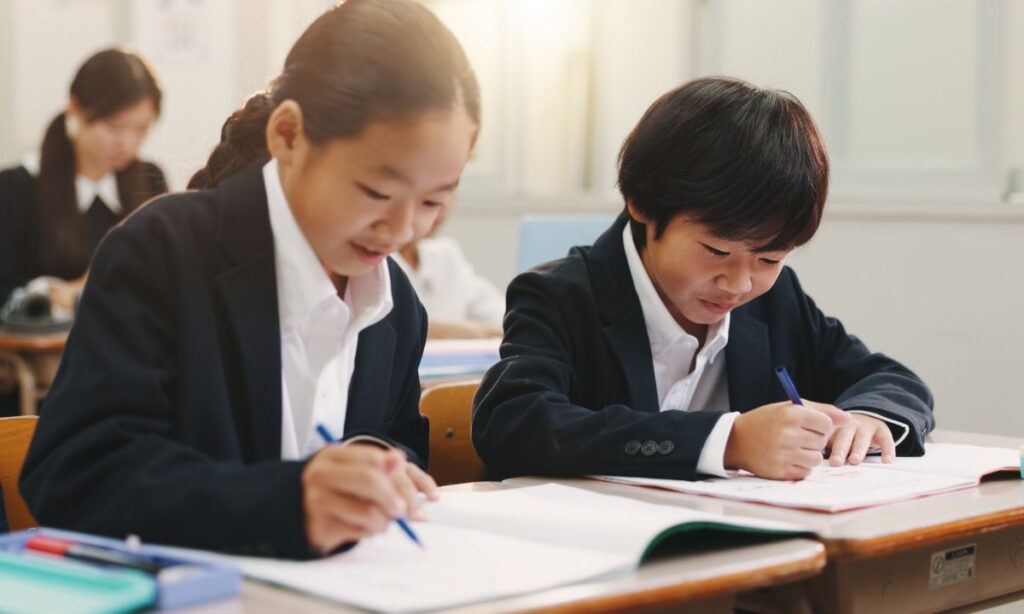


A2 Key for Schools Speaking Camp
An M2 student who has spent the previous three mornings building A2 Key for Schools vocabulary about animals, the environment, and expressing opinions is standing in front of a rescued elephant at the Hutsadin Elephant Foundation in Hua Hin. The native teacher asks her what she thinks about elephant tourism in Thailand. She has not prepared this answer. She has no script. She has a morning’s worth of English, a set of grammatical tools she has been developing across three days of a maximum-twelve-person session, and a genuine opinion about what she is experiencing. She speaks. It is not perfect English. It is real English — extended, communicative, and produced without a safety net — and it is exactly what the A2 Key for Schools speaking assessment requires.
The A2 Key for Schools speaking camp in Thailand at ILC Hua Hin is built on the understanding that speaking confidence under pressure is not developed through scripts or through drilled examination responses. It is developed through repeated experience of successfully communicating in genuinely unprepared situations, with a native English speaker who responds to what you actually say rather than what you were supposed to say.
What the A2 Key for Schools Speaking Component Requires
The A2 Key for Schools speaking test has a specific structure: students begin with a short interaction phase in which they answer personal questions from the examiner, then move to a collaborative task in which they discuss a topic with another candidate using picture prompts, and then respond to follow-up questions from the examiner about the topic they have just discussed. The entire test takes approximately eight to ten minutes and requires students to produce genuinely extended, spontaneous spoken English across three different task types.
At ILC Hua Hin’s A2 Key for Schools speaking camp in Thailand, these three task types are not drilled as examination exercises — they are developed through the natural structure of the programme itself. The personal questions phase is developed through the native teacher’s genuine interest in each student across three hours of daily conversation. The collaborative task is developed through the paired and small group speaking activities that the maximum-twelve class size makes genuinely interactive. The follow-up questions are developed through the afternoon cultural visits, which generate exactly the kind of unprepared, topic-based conversation that the examination’s third phase requires.
How Three Hours of Morning Instruction Builds Examination-Ready Speaking
Three hours each morning with a native English teacher in a class of no more than twelve is the format that develops the speaking behaviours the A2 Key for Schools examination rewards most efficiently. The native teacher designs sessions around the specific vocabulary and grammar targets of the A2 Key for Schools preparation framework — each morning building on the previous one, introducing new content while reinforcing what has already been established.
The small class size means that the native teacher can hear every student speak multiple times in every session, provide specific and useful feedback on what each individual is doing well and what needs adjustment, and design follow-up activities that address the specific gaps they have observed. This level of instructional precision is what distinguishes the A2 Key for Schools speaking camp in Thailand from a standard examination preparation class, and it is what produces the speaking confidence that students carry into the examination room.
The Afternoon: Hutsadin Elephant Foundation
The visit to the Hutsadin Elephant Foundation outside Hua Hin is the afternoon activity that students on the A2 Key for Schools speaking camp in Thailand most consistently describe as the most memorable of the programme — and memory is not incidental to language development. Vocabulary and communicative experiences that are emotionally significant are retained more reliably than those that are not, and the experience of feeding, learning about, and engaging with rescued elephants in a responsible sanctuary environment is significant in a way that generates the kind of motivated, spontaneous English speaking that makes the afternoon programme so valuable.
Students describe the elephants, discuss their feelings about conservation, explain what they have learned, and express opinions about how elephants should be treated in Thailand — all in A2 Key for Schools English, all in response to a native teacher who is genuinely curious about what each student thinks. The environment and conservation vocabulary from the morning session appears naturally in the conversation, reinforced by the reality of the situation rather than by an exercise requirement.
ILC Hua Hin provides 24/7 supervision for all residential and off-site elements of the programme, including the elephant sanctuary visit. Full safeguarding and welfare details are available before any booking is confirmed.
The British Council’s framework for young learners and Cambridge’s parent resources provide external context for school communication about the programme.
Use the ILC Hua Hin English level test before booking to confirm your M2 group is appropriately placed for the A2 Key for Schools framework.
Explore the Residential English Speaking Camp at ILC Hua Hin to see how the A2 Key for Schools speaking camp in Thailand is structured across different durations. Speak to our team to discuss what the programme would deliver for your M2 students.