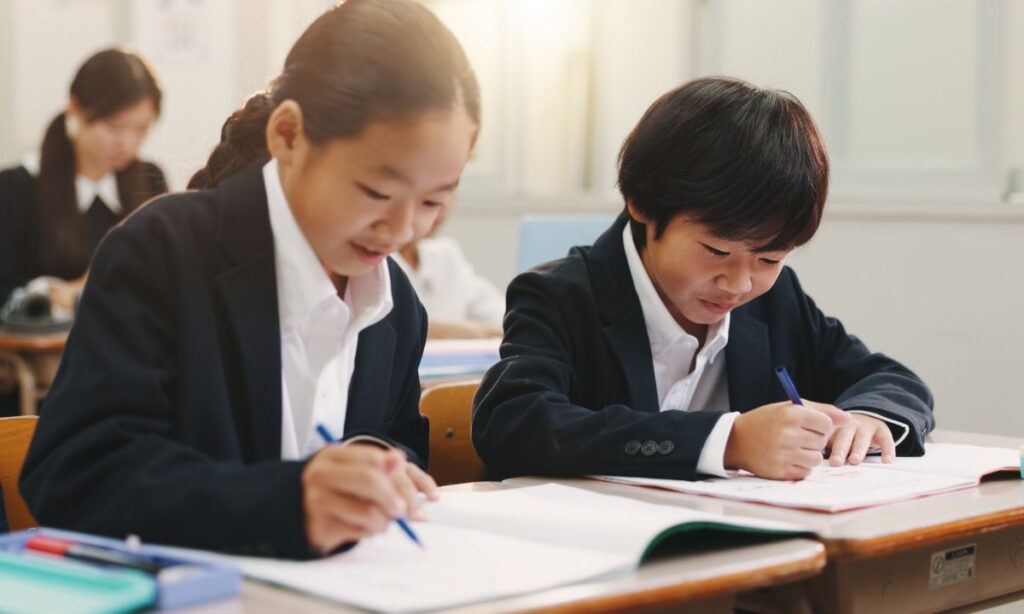


A2 Key for Schools English Camp 2026
M2 students in Thailand arrive at secondary school carrying a significant amount of English — vocabulary from primary school, a basic grasp of grammar, and enough reading ability to handle simple texts. What most of them have not yet developed is the ability to use that knowledge in real, spontaneous communication. They know the words. They understand the structures. But sitting in front of an English speaker and producing a coherent, extended response in real time is a different challenge entirely, and one that classroom preparation alone has never been particularly good at solving. An A2 Key for Schools English camp in Thailand changes this by placing M2 students in an environment where English is not just taught but actually used — for three hours each morning with a native teacher, in a class of no more than twelve, with an afternoon cultural programme in Hua Hin that turns the town into an extended speaking classroom.
The A2 Key for Schools qualification sits at CEFR level A2 — the level that bridges the Cambridge Young Learners pathway and the more demanding B1 Preliminary for Schools that follows it. It assesses all four skills: reading, writing, listening, and speaking. But speaking is where most M2 students need the most concentrated development, and speaking is the skill that a residential programme with a native English teacher and small class sizes develops most effectively. Three hours of morning instruction, a maximum of twelve students, and a teacher who is genuinely engaging with each one — this is the environment in which A2 Key for Schools speaking skills develop in a way that a classroom of thirty students and forty minutes of lesson time cannot replicate.
What M2 Students Learn Within the A2 Key for Schools Framework
The A2 Key for Schools qualification covers vocabulary and communicative functions across a range of topics that are directly relevant to secondary school students — travel and transport, food and eating, the environment, sport and leisure, school and education, people and relationships, and the world around them. The grammar targets include past simple and past continuous, comparative and superlative forms, modal verbs for ability and permission, and the question forms that allow students to engage in real interactive conversation rather than monologue.
At the A2 Key for Schools English camp in Thailand, all of this content is developed through speaking — through the kind of real communicative interaction with a native teacher that makes language stick rather than simply accumulating it in a vocabulary list. The speaking component of the A2 Key for Schools preparation requires students to describe photographs, interact with a partner, and respond to personal questions in extended English — all skills that three hours of daily native teacher instruction in a class of twelve addresses directly and purposefully.
The Afternoon: Hua Hin Railway Station
Every afternoon of the camp, students leave the residential setting and engage with Hua Hin. On the railway station afternoon, they visit one of Thailand’s most photographed and most historically interesting buildings — built in 1926 in traditional Thai architectural style, the station is a genuinely beautiful environment that generates the kind of spontaneous descriptive English that the A2 Key for Schools English camp in Thailand is designed to produce.
The native teacher structures the visit around specific A2 Key vocabulary and speaking tasks. Students describe what they see, discuss when and why the station was built, compare it to modern stations they know, and engage in the kind of paired conversation that the A2 Key speaking assessment uses. None of this is forced — the station is interesting enough that students want to talk about it, and the native teacher facilitates rather than directs the conversation.
This is the specific value of the afternoon programme. Vocabulary practised in the morning session — transport, history, description — appears again in the afternoon in a real-world context, reinforced by the genuine communicative motivation of being somewhere new and interesting. The A2 Key for Schools English camp in Thailand works because the morning and afternoon are integrated, not because they happen in parallel.
Small Classes, Three Hours, Real Progress
Twelve students is not an arbitrary cap — it is the class size at which a native English teacher can genuinely attend to every student in a session. In a class of twelve, every student speaks every lesson. Every error is heard and addressed. Every question receives a real answer. The British Council’s guidance on teaching young learners consistently emphasises that individual attention and authentic communicative interaction are the two most significant factors in speaking development, and a maximum of twelve students per native teacher session at the A2 Key for Schools English camp in Thailand ensures both.
Three hours of morning instruction provides the concentration that speaking development requires. Not forty minutes, not one lesson per week — three full hours each morning with a teacher whose English is naturally authentic, whose interest in what students say is genuine, and whose approach to correction builds confidence rather than eroding it.
ILC Hua Hin provides 24/7 supervision for all residential and off-site elements of the programme. Full welfare details are available before any booking is confirmed. Use the ILC Hua Hin English level test to confirm your M2 students are at the right level before arrival.
Find out more about the Residential English Speaking Camp at ILC Hua Hin, or explore the Residential English Tours as a broader alternative. Speak to our team to discuss what an A2 Key for Schools English camp in Thailand would look like for your M2 group, including dates, duration, and rates.