

Cambridge A2 Key Camp for Thai Schools
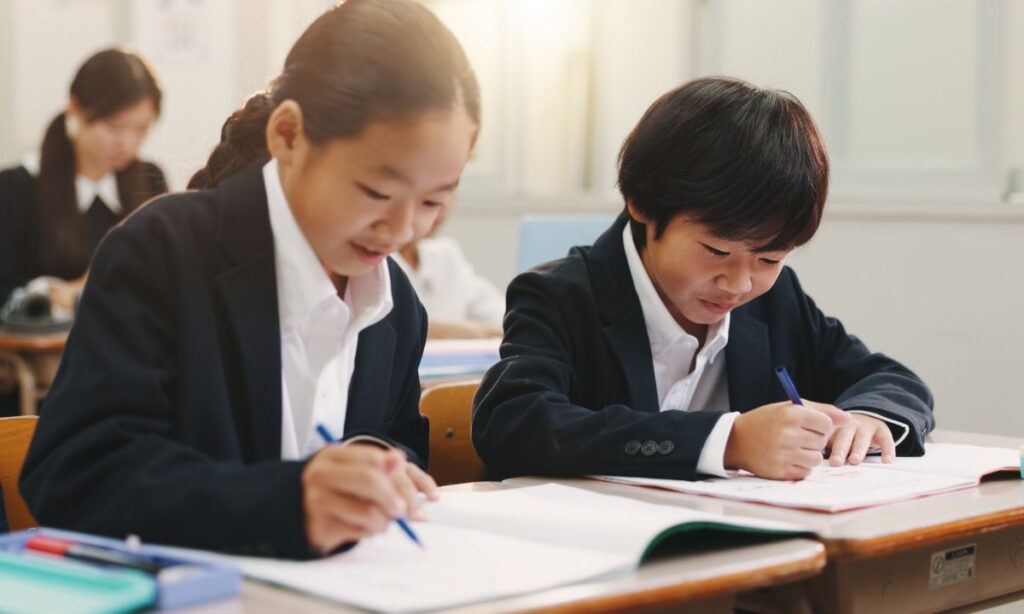
The question is worth answering precisely, because the answer is what allows school directors to justify the programme to parents and management, and what allows parents to understand what three to five days in Hua Hin is actually developing in their child. A Cambridge A2 Key camp for Thai schools is not a collection of English activities loosely themed around an internationally recognised name. It is a structured, daily programme built on the specific vocabulary, grammar, and communicative functions that the A2 Key for Schools qualification targets — delivered by a native English teacher in classes of no more than twelve students, for three hours every morning, with an afternoon cultural activity programme that places the morning’s language in genuine real-world communicative contexts across Hua Hin.
The Reading and Writing Skills That the Camp Develops
The A2 Key for Schools qualification tests reading through a range of task types — matching, multiple choice, gap fill, and open questions — that require students to understand not just individual words but the meaning of short texts, notices, emails, and informational paragraphs. A Cambridge A2 Key camp for Thai schools addresses these reading skills not through drilling past papers, but through the kind of authentic text engagement that native teacher instruction produces — reading activities that are connected to topics students genuinely care about, analysed and discussed in sessions where the native teacher can explain why a particular answer is correct and what the text is actually communicating.
Writing at A2 Key level requires students to produce short emails, notes, and personal messages — functional writing tasks that require grammatical accuracy, appropriate register, and the ability to communicate a clear message within a limited word count. The camp develops these skills through tasks that mirror real communicative situations, giving M2 students practice in the kind of English writing that will serve them throughout secondary school.
The Speaking and Listening Skills at the Centre of the Programme
Speaking is where the Cambridge A2 Key camp for Thai schools concentrates most specifically. The A2 Key speaking test requires students to describe a photograph, engage in a conversation with a partner about an everyday topic, and respond to personal questions from the examiner in extended English. These tasks require genuine communicative confidence — the ability to produce extended speech without a script, to respond to something unexpected, and to sustain a conversation rather than retreating to minimal answers.
Three hours of native teacher instruction each morning in a class of no more than twelve students develops these speaking behaviours directly. Every session involves real interaction — not practice dialogues read from a script, but genuine conversation with a native speaker who responds to what each student actually says and pushes their productive range a little further each time. Listening skills are developed through the same interaction — the native teacher’s naturally authentic spoken English provides the kind of listening input that recorded materials cannot replicate, because it adapts to what students say and models the natural rhythm and intonation of real English conversation.
The A2 Key for Schools preparation resources provide the academic framework that underpins each morning session — vocabulary lists, grammar targets, and communicative functions that the native teacher delivers through activities tailored to the specific group.
The Afternoon: Plearn Wan Vintage Village
The afternoon visit to Plearn Wan takes M2 students to one of Hua Hin’s most distinctive and most visually interesting destinations — a vintage village designed around early twentieth century Thai commercial life, with small wooden shophouses, traditional food stalls, and an atmosphere that is genuinely unlike anywhere else in the town. The A2 Key vocabulary for daily life, food, shopping, and the comparison of past and present finds immediate and natural application here.
Students describe what they see, discuss what life might have been like in the past, compare the vintage setting to their own daily environment, and express opinions about what they prefer — all in the English that the morning session has been developing. The native teacher walks through the village with the group, engaging each student in the kind of genuine, responsive conversation that transforms a cultural visit into a language development experience. By the time the group returns for the evening programme, the vocabulary and communicative functions of the morning session have been applied in a context that will remain memorable long after the camp ends.
For a Cambridge A2 Key camp for Thai schools to deliver real outcomes, the morning and afternoon need to function as a coherent programme rather than as separate elements. At ILC Hua Hin, this integration is built into the programme design from the first day.
ILC Hua Hin provides 24/7 supervision across all residential and off-site elements of the programme. School directors can request full safeguarding details before confirming any booking. The British Council’s young learner framework and Cambridge’s parent resources provide useful external context for communicating the programme to parents.
Use the ILC Hua Hin English level test to confirm your M2 group is appropriately placed before arrival.
Find out more about the Residential English Speaking Camp at ILC Hua Hin, or explore the Residential English Tours as a broader alternative. Speak to our team to discuss how a Cambridge A2 Key camp for Thai schools can be planned around your school’s calendar and budget.