

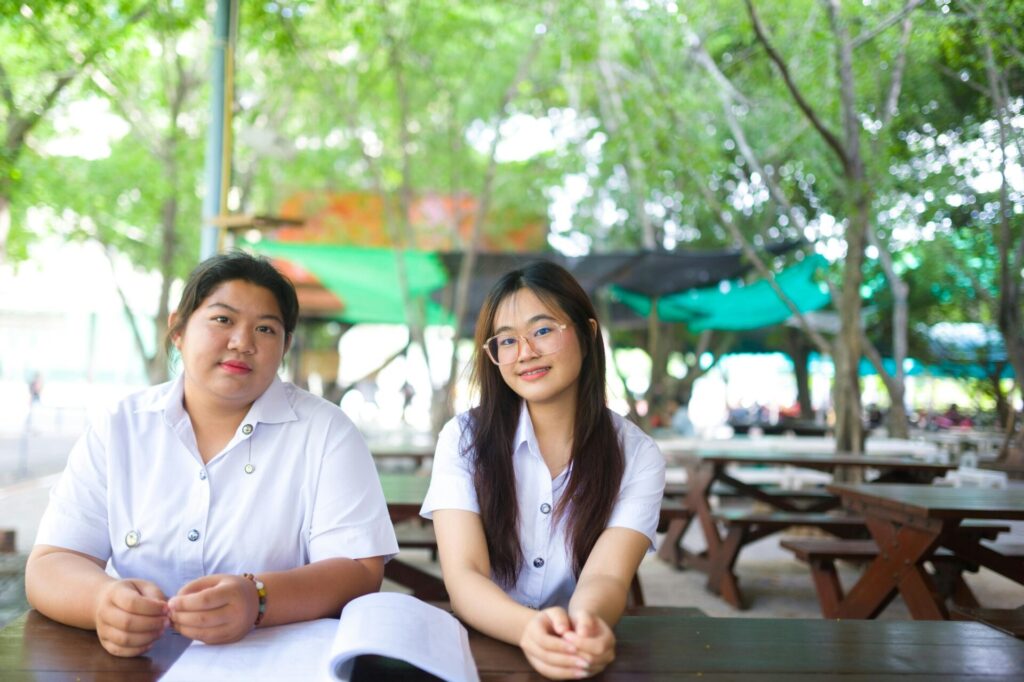
Cambridge Key for Schools Preparation Camp
Preparing M2 students for the A2 Key for Schools examination in Thailand is usually a classroom-based process: past papers, vocabulary lists, listening exercises from a CD, and occasional speaking practice that never quite gets enough time. The reading and writing skills are teachable in a standard classroom setting. Listening can be developed with the right materials. But the speaking preparation — the part of the exam that requires students to produce extended English in a genuine interactive situation — is the component that classroom preparation consistently under-serves. A Cambridge Key for Schools preparation camp in Thailand addresses this directly, by placing M2 students in a residential environment where speaking is the central activity of every morning session, with a native English teacher and classes of no more than twelve.
The A2 Key for Schools speaking test requires students to describe a photograph in extended English, take part in a conversation with another candidate about an everyday topic, and respond to personal questions from the examiner about their own life and opinions. None of these tasks rewards minimal answers — they all reward extended, confident, naturally produced spoken English. Three hours of daily native teacher instruction in a class of twelve is the most efficient way to develop these speaking behaviours that a residential programme offers.
The Grammar That the Preparation Camp Develops
The A2 Key for Schools vocabulary and grammar framework covers a specific set of structures that the examination uses across all four skills. At a Cambridge Key for Schools preparation camp in Thailand, these structures are introduced and developed through speaking tasks that require students to use them actively. Past simple and past continuous allow students to narrate — to tell the examiner something that happened to them, to describe what was happening in a photograph. Comparative and superlative forms allow students to describe and evaluate — to explain why they prefer one thing to another, to compare two pictures, to discuss the differences between two situations.
Modal verbs — can, could, should, might, would — develop the ability to discuss possibility, preference, and permission in natural English conversation. Question formation — both direct and indirect — allows students to participate in the interactive parts of the speaking assessment with genuine conversational fluency rather than the mechanical production that script-based preparation produces. At ILC Hua Hin, all of these structures emerge through communication — through the sessions that the native teacher designs around the A2 Key for Schools preparation framework and the real interactions the afternoon programme generates.
The Reading and Listening Integration
The Cambridge Key for Schools preparation camp in Thailand is not exclusively a speaking programme — the morning sessions integrate all four skills in the way that genuine language development requires. Listening to the native teacher’s naturally authentic spoken English for three hours each morning develops the listening comprehension that the A2 Key examination tests through recorded conversations and announcements. Reading short texts as the basis for discussion tasks develops the reading skills the qualification tests across its seven-part paper.
These skills reinforce each other in ways that isolated skill practice cannot achieve. A student who reads a short text about food in Hua Hin and then discusses it with the native teacher is developing reading comprehension, vocabulary, speaking fluency, and listening comprehension simultaneously — in a genuinely communicative context that the examination’s tasks are designed to mirror.
The Afternoon: Maruekhathayawan Palace
The afternoon visit to Maruekhathayawan Palace — the summer palace of King Vajiravudh built in 1923 entirely from golden teak wood on the coastline between Hua Hin and Cha-am — is one of the most historically significant and most visually stunning stops in the afternoon programme. The palace is a UNESCO-listed structure, elevated above the sea on wooden pillars, with a series of interconnected halls and rooms that provide the context for architectural description, historical narrative, and cultural discussion in A2 Key for Schools English.
Students describe the building’s unusual construction, discuss when and why it was built, compare it to other buildings they know, and express opinions about its beauty and its historical significance — all in the English that the morning’s Cambridge Key for Schools preparation camp in Thailand sessions have been developing. The native teacher facilitates the conversation throughout the visit, extending it in directions that require students to produce language they have not specifically prepared, which is exactly what the A2 Key speaking assessment requires them to do.
ILC Hua Hin provides 24/7 supervision for all residential and off-site elements of the programme, including the palace visit. Full details of safeguarding arrangements are available for school directors before any booking is confirmed. The British Council’s guidance on young learner English and Cambridge’s resources for parents provide useful context for school communication.
Use the ILC Hua Hin English level test to confirm the right level for your M2 group before booking.
Explore the Residential English Speaking Camp at ILC Hua Hin to see how the Cambridge Key for Schools preparation camp in Thailand works across different durations. Speak to our team to discuss examination timelines, available dates, and what the programme would deliver for your M2 students.