
Secondary School English Camp M2
There is a version of a residential English camp for M2 students that puts forty students in a hall with three teachers and calls it an immersive experience. And there is a version that places no more than twelve students with one native English teacher for three hours every morning in a genuinely interactive, speaking-focused session built on the A2 Key for Schools framework. The outcomes of these two versions are not comparable, and the difference is not subtle. Small class sizes in a secondary English camp in Thailand are not a luxury feature — they are the operational condition that makes genuine speaking development possible.
At ILC Hua Hin, the cap of twelve students per native teacher session is the non-negotiable foundation of the A2 Key for Schools residential camp programme. Everything else the programme offers — the quality of the teacher, the Cambridge framework, the afternoon cultural programme — delivers its full value only because the class size allows it to.
What Twelve Students Per Teacher Actually Changes
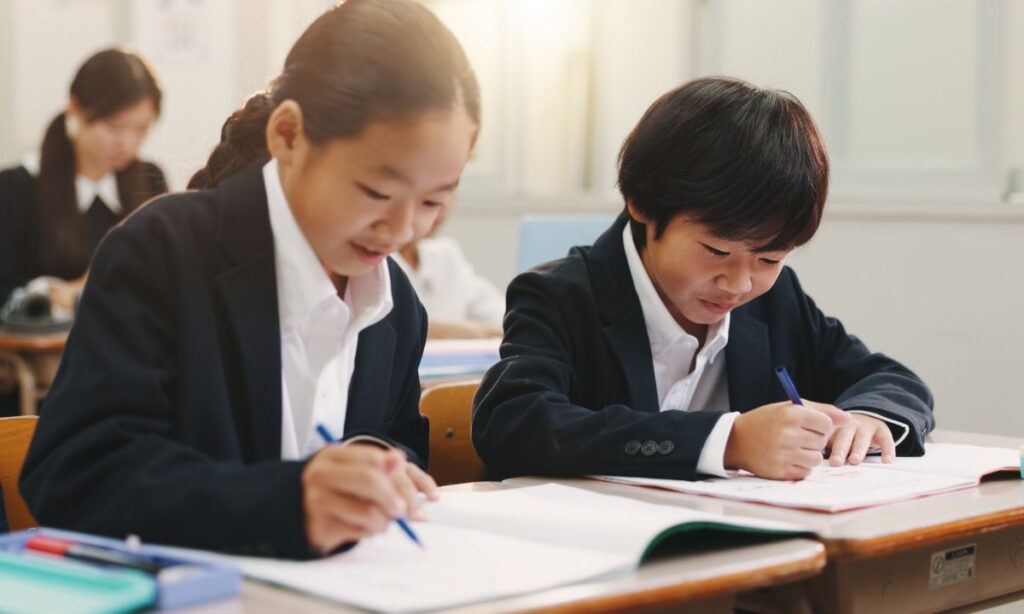
In a class of twelve, every student speaks every session. Not every student who volunteers — every student, because the class is small enough that the teacher can ensure participation from each individual without the session feeling like a test. The native teacher knows within the first day who is hesitating before speaking, who is using a vocabulary workaround because they cannot recall the specific word, who has accurate grammar but poor intonation, and who is making the same tonal error on a particular vowel sound in every utterance.
In a standard secondary school class of twenty-five or thirty, these observations are made slowly across weeks of teaching. In a class of twelve on a secondary English camp in Thailand, they are made in the first session and acted on immediately. The native teacher adjusts the pace, the task design, and the individual interactions of every subsequent session based on what they learned in the first one. This is the specific advantage of the small group format — not just that students get more turns to speak, but that the teacher’s response to what they produce is genuinely calibrated to them.
The A2 Key for Schools Framework Within the Small Group
The A2 Key for Schools qualification covers vocabulary, grammar, and communicative functions across topics including food and drink, travel and transport, the environment, education, sport, and everyday social life. In a class of twelve on a secondary English camp in Thailand, these topics become the material for genuine discussion — twelve students with twelve different perspectives on whether the environment matters, whether the food they are eating in Hua Hin is better than what they eat at home, whether sport is important or boring. The conversations are real, and real conversations produce real language development in a way that designed tasks only approximate.
Three hours of this every morning, across three to five days, produces a depth of communicative engagement with the A2 Key for Schools vocabulary and grammar that twelve weeks of once-weekly lessons cannot match. The preparation resources Cambridge provides structure the content of each session. The native teacher and the small class size are what make the content come alive.
The Afternoon: Wat Huay Mongkol
The afternoon visit to Wat Huay Mongkol — the temple complex outside Hua Hin best known for its enormous statue of the revered monk Luang Pho Thuad — gives students one of the most culturally resonant and most visually striking experiences of the camp. The temple is quiet, vast, and genuinely unlike anything in most students’ experience, and it generates a specific kind of contemplative, descriptive English that the secondary English camp in Thailand’s morning sessions build towards.
The native teacher facilitates conversation about the statue, the temple complex, the atmosphere, and the cultural significance of what students are seeing. Students who are not accustomed to speaking about culture, religion, or the significance of historical places in English find that the scale and presence of the site pulls language out of them — descriptions, comparisons, questions, and the kind of opinion-giving and preference-expressing that the A2 Key for Schools speaking framework specifically develops.
This afternoon activity connects directly to the environment and culture vocabulary of the morning sessions, giving the secondary English camp in Thailand’s integrated programme one of its most powerful single-day experiences.
ILC Hua Hin provides 24/7 supervision for all residential and off-site elements of the programme. Full safeguarding details are available before any booking is confirmed. The British Council’s young learner guidance provides external context for school and parent communication.
Use the ILC Hua Hin English level test before booking to establish your M2 students’ current level within the A2 Key framework.
Find out more about the Residential English Speaking Camp and how the small group format works in practice. The Residential English Tours is available for schools wanting a broader immersive experience. Speak to our team to discuss what a secondary English camp in Thailand with a maximum of twelve students per class would deliver for your M2 group.